

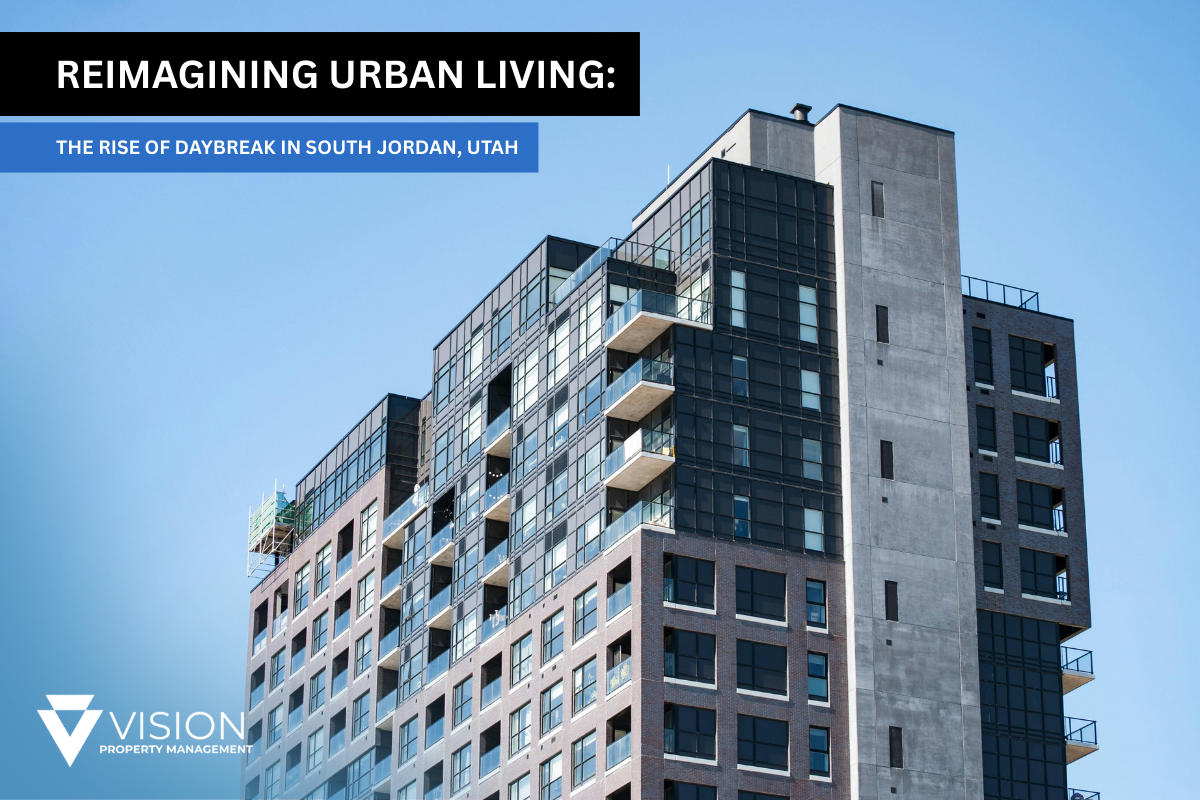
In the evolving landscape of Utah’s housing market, few developments encapsulate the intersection of sustainable planning, community vision, and urban convenience quite like Daybreak—the master-planned community in South Jordan. More than just a neighborhood, Daybreak offers a blueprint for how modern living spaces can foster connectivity, sustainability, and economic vitality, all while responding to the profound needs of a growing region.
A Master-Planned Legacy
Daybreak spans over 4,000 acres—formerly the site of the Bingham Canyon Mine—redeveloped with intentionality and forward-looking design Clever Real Estate+11Mountain West+11New York Post+11Wikipedia. Acquired in part by the Larry H. Miller Company, the remaining 1,300 acres are slated for construction over approximately two decades, with ambitious plans to include over 20,000 residential units and nearly 9.1 million square feet of commercial space Wikipedia+1.
What makes Daybreak distinctive is its underpinning commitment to sustainability: homes are Energy Star certified, many incorporate solar and thermal technologies, and fiber-optic internet is widely integrated Wikipedia. This holistic approach goes beyond brick and mortar—it’s about creating an environment where resilience and quality of life thrive concurrently.
Urban Convenience Meets Lifestyle
Daybreak is not only housing—it’s lifestyle infrastructure. Downtown Daybreak has been intentionally designed to reflect a vibrant, walkable ecosystem, complete with a library, a health center with urgent care, fire and police services, and plans for a University of Utah campus The Salt Lake Tribune+14Wikipedia+14Business Insider+14. Moreover, the forthcoming new stadium for the Salt Lake Bees (Triple-A minor league) is positioning Daybreak as an entertainment and sports anchor, further cementing its role as a regional destination Zillow+8Wikipedia+8Wikipedia+8.
A Regional Game‑Changer
In Utah’s rapidly expanding housing market, Daybreak represents a rare model of proactive, community-scale development. While the broader state is experiencing steady—but increasingly outpaced—demand, with home values roughly flat in 2024 and listings outpacing supply Business Insider+12CloudFront+12moveutahrealestate.com+12, Daybreak’s integrated infrastructure goes beyond housing to cultivate comprehensive urban growth.
Provo, for instance, leads the nation in having the youngest homes sold—median age just six years—due to rapid construction driven by population gains Axios+1. Meanwhile, Salt Lake City remains one of America’s hottest real estate markets in 2025, despite constrained construction and inventory shortfalls Axios. Daybreak offers an intentional, scalable response to such growing pains.
Why Daybreak Matters as Thought Leadership
- Sustainable Urban Design
Daybreak blends energy efficiency, green infrastructure, and modern planning, setting standards for future developments. - Community-Centric Amenities
From health services to entertainment, Daybreak is designed for community life—not just occupancy. - Strategic Growth Management
Years-long buildout allows planning flexibility, serving as a template for deliberate, phased expansion. - Economic & Social Impact
With thousands of homes and commercial spaces, Daybreak supports local economies, housing affordability, and lifestyle diversification.
A Reflection for Real Estate Leaders
For developers, planners, and policymakers, Daybreak isn’t just another master plan—it’s a vision realized, where infrastructure and community needs converge. It underscores the potential of transforming underutilized land into dynamic, sustainable ecosystems. As Utah navigates housing affordability and supply constraints, such models offer a roadmap grounded in collaboration, foresight, and resilience.